Operating a coastal aquaculture farm without CAA registration can attract serious penalties. Registration is not optional paperwork — it is the law. Freshwater scampi farms follow state fisheries rules, not CAA, so check your state department.
Why registration matters
CAA was created to regulate coastal aquaculture so that it develops without damaging coastal environment, mangroves and CRZ areas. Registration gives your farm a legal identity, lets you access certified seed, and is required for MPEDA enrolment, SHAPHARI certification and export traceability.

The process step by step
Prepare your farm and documents
Complete pond construction, then gather land ownership, site and layout documents.
Apply for farm registration
Submit the application to CAA (or the state nodal agency) in the prescribed form.
Farm inspection
CAA officials inspect the farm — layout, dykes, reservoir, ETS and biosecurity measures.
Receive registration
On approval, you get a registration certificate for the farm.
Apply for vannamei permission
Separate application to culture L. vannamei, again followed by inspection.
Buy certified seed only
Once approved, stock only tested, certified seed from CAA-authorized hatcheries.
Documents you typically need
The exact list is set by CAA and can change — always confirm on the official CAA website. Commonly required items include:
- Land ownership / lease / patta documents
- Site plan and farm layout (ponds, channels, reservoir, ETS)
- Water source and quality details
- Identity and address proof of the applicant
- CRZ / environmental clearance documents where applicable
Fees
Fee amounts are set by CAA notification and vary by farm area and state. Do not rely on third-party numbers — check the current fee schedule on the official CAA website or your state nodal agency before paying.
Official sources: the CAA website, your state fisheries department, and MPEDA. Ask for the latest notification and fee schedule in writing.
Biosecurity and ETS requirements
CAA guidelines expect farms to have basic biosecurity and an effluent treatment system (ETS). Typical requirements:
- Fencing around the farm and bird netting over ponds
- Reservoir for treating incoming water
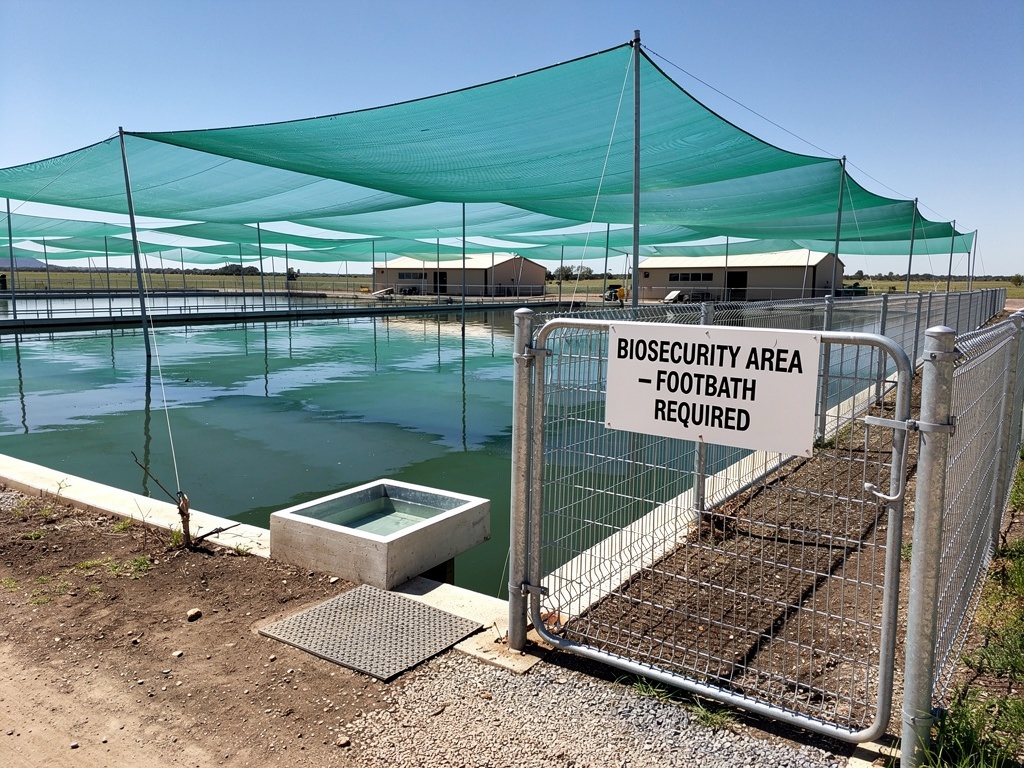
- Dedicated implements and foot-bath disinfection
- Effluent treatment system (ETS) for outgoing water
- Zero or low water exchange where required
Penalties for non-compliance
Farming without registration, using non-certified seed, or using banned antibiotics can attract serious penalties under the CAA Act and related rules. Residue-free production is required for export, especially to the EU.
Banned antibiotics and many pharmacologically active substances are prohibited in shrimp farming. Using them can lead to penalties, export bans and loss of market access. Stay within official BMPs — never use unapproved chemicals.
Frequently asked questions
Yes, for coastal aquaculture. Freshwater scampi farms are governed by state fisheries rules instead.
Yes. You need both: farm registration and a separate permission to culture L. vannamei, granted after inspection.
No. Only tested, certified seed from CAA-authorized hatcheries is allowed. Always ask for certification and test reports.
Through CAA or your state nodal agency. Check the official CAA website for the current application path and forms.
More regulation and support
MPEDA enrolment, SHAPHARI certification, PMMSY subsidies and FIDF loans.
Government schemes Getting started