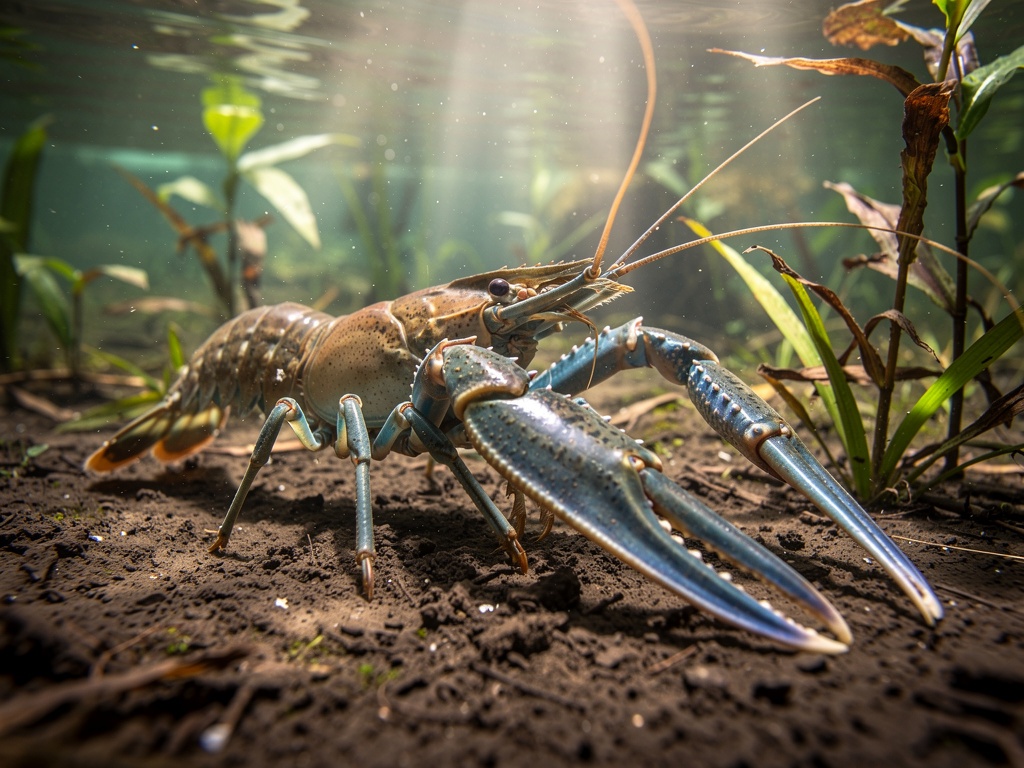
Biology at a glance
Scampi is a true freshwater prawn that grows large — males can reach 80 g or more. It is native to India and is farmed in freshwater ponds, often alongside Indian and Chinese carps. Its long blue claws and firm, sweet meat make it popular in domestic markets.
Water and salinity
Scampi is farmed in freshwater, though it tolerates low salinity (up to about 10 ppt). The larvae need brackish water in the hatchery, but grow-out is in fresh water.
| Parameter | Ideal range | Notes |
|---|---|---|
| Salinity | 0–5 ppt | Freshwater grow-out |
| Temperature | 26–32 °C | Grows well in warm water |
| Dissolved oxygen (DO) | ≥ 4 mg/L | Critical in summer |
| pH | 7.0–8.5 | Neutral to slightly alkaline |
| Water depth | 1–1.5 m | Deeper ponds help in summer |
Polyculture with carps
Scampi is often grown in polyculture with carps (catla, rohu, mrigal, or Chinese carps). The prawns use the bottom and edges, the carps use the water column, and both benefit from the same pond fertilisation. This spreads risk and adds income per hectare.
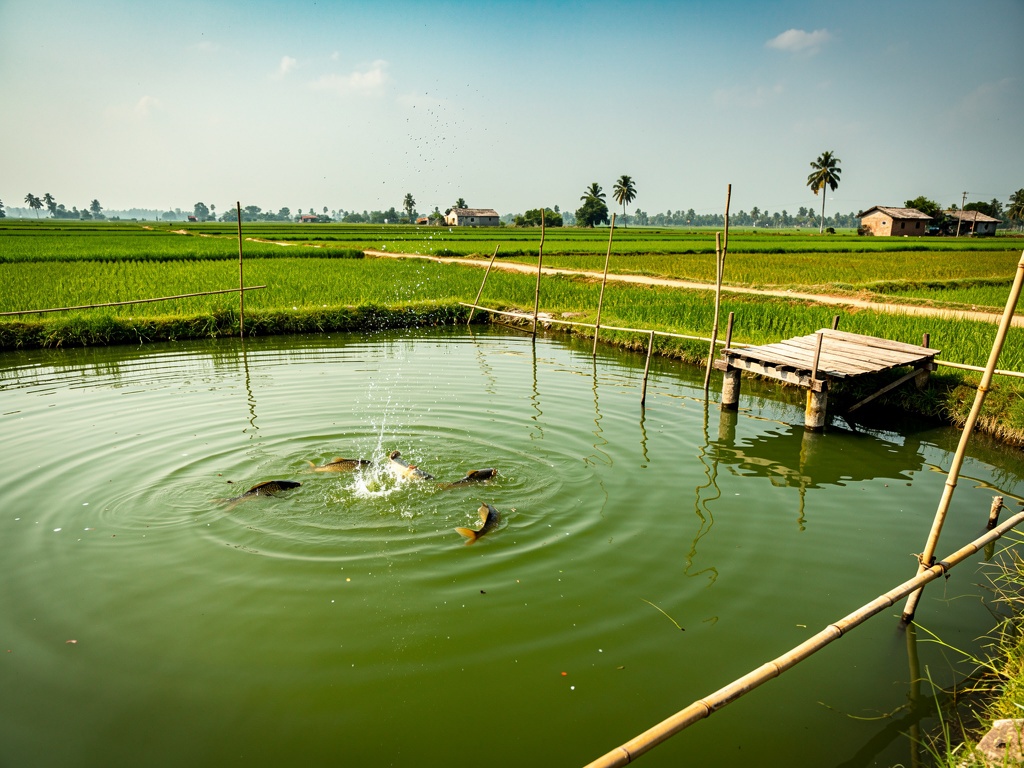
Different feeding niches, better use of natural food, and a second income stream. Follow CIFA stocking ratios for scampi + carp combinations.
Crop cycle
| Stage | Duration | Key actions |
|---|---|---|
| Pond preparation | 2–3 weeks | Drying, liming, fertilising, bloom |
| Nursery (optional) | 30–45 days | Grow post-larvae to juveniles |
| Grow-out | 5–7 months | Feeding, water management, selective harvest |
| Harvest | 2–4 weeks | Selective harvest of large males |
Because males grow much faster than females, farmers selectively harvest the big males and let females and smaller animals grow on.
Seed
Buy post-larvae (PL) or juveniles from a reliable hatchery or from state fisheries / CIFA-supported nurseries. Ask for healthy, active animals of uniform size. Seed quality and size grading strongly affect survival and growth.
Feeding
Scampi eat natural pond food plus supplementary feed. Use a prawn-specific or fish feed and feed on trays. FCR is higher than vannamei — roughly 1.8–2.5 — because the crop is longer and the animals are larger.
Market and GI scampi
Scampi is sold mainly in domestic markets — fresh, iced or frozen — and increasingly through GI-tagged branding that raises its value. The revival push includes better seed, polyculture packages and market development.
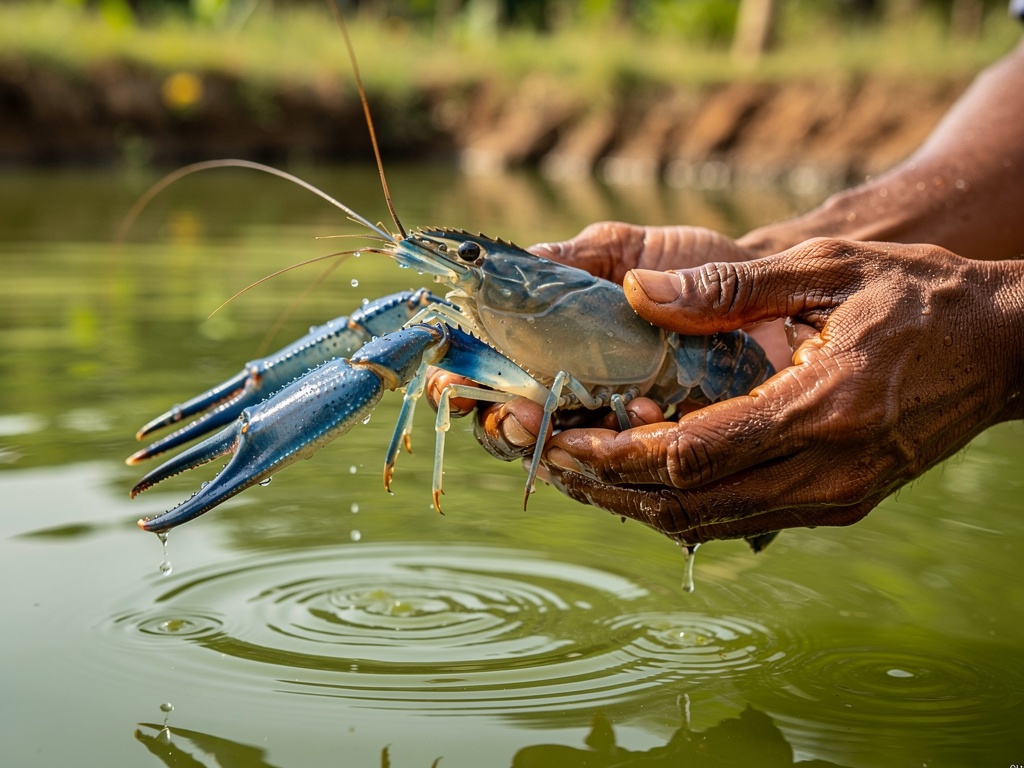
Unlike coastal shrimp, scampi's main market is inside India. Check local demand and price before scaling up — the market is growing but thinner than the export shrimp trade.
Is scampi right for your pond?
Compare freshwater scampi with coastal vannamei and tiger shrimp before you decide.
Vannamei guide Costs & returns