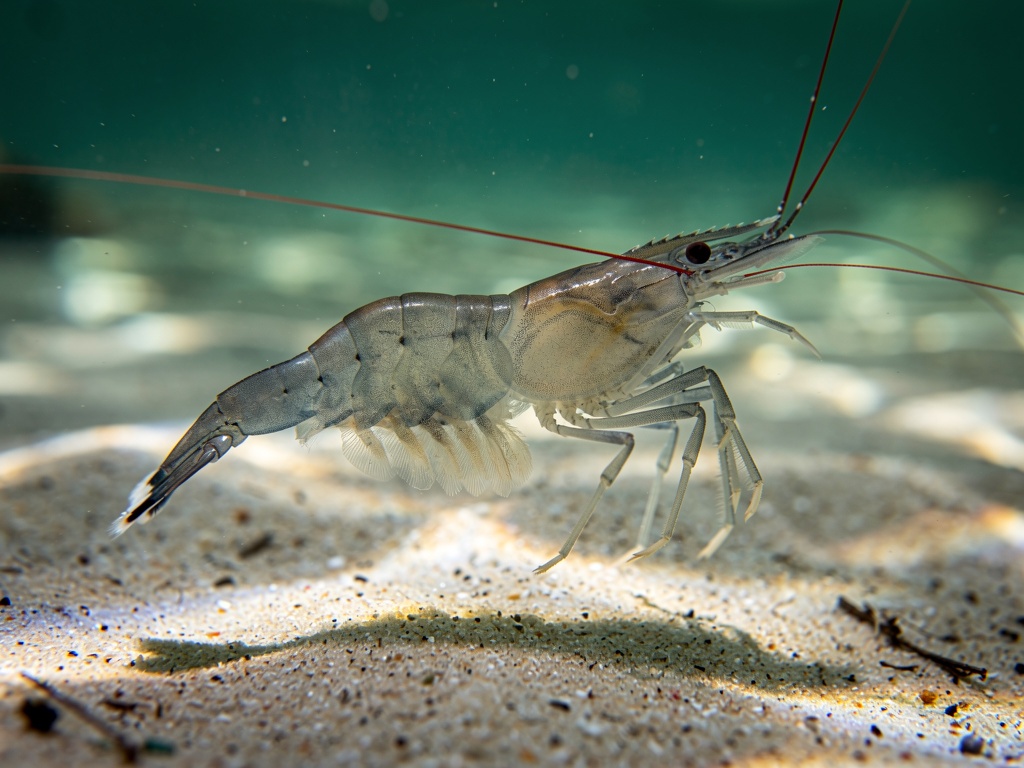
Biology at a glance
Vannamei is a euryhaline species — it tolerates a wide salinity range, which is why it can be grown in coastal brackish water and, in some states, in low-salinity inland ponds. It grows faster and reaches market size sooner than black tiger shrimp, and it survives better at higher stocking densities.
Because it is an exotic species in India, culturing it is tightly regulated: you need CAA registration for the farm plus a separate permission to culture L. vannamei, granted only after a farm inspection.
Fast growth, high survival at density, SPF seed availability from CAA-authorized hatcheries, and a huge export market for frozen shrimp. That combination is why it replaced most tiger shrimp farming in the 2010s.
Salinity and water requirements
| Parameter | Ideal range | Notes |
|---|---|---|
| Salinity | 10–25 ppt | Grows from ~0.5 to 40 ppt, but extremes slow growth |
| Temperature | 26–32 °C | Below 24 °C growth drops sharply |
| Dissolved oxygen (DO) | ≥ 4 mg/L | Check dawn readings; keep above 3 mg/L |
| pH | 7.5–8.5 | Daily swing should be small |
| Total ammonia (TAN) | < 1 mg/L | Un-ionized ammonia (NH₃) < 0.1 mg/L |
| Alkalinity | 100–200 mg/L | Stabilises pH; add lime if low |
See the water quality guide for the full table and daily monitoring routine.
Crop cycle
| Stage | Duration | Key actions |
|---|---|---|
| Pond preparation | 2–3 weeks | Drying, liming, fertilising, water filling, plankton bloom |
| Nursery (optional) | 15–25 days | Grow PL to 0.5–1 g for stronger stocking |
| Grow-out | 90–120 days | Feeding, aeration, water exchange, health checks |
| Harvest | 1–2 weeks | Partial or full harvest, icing, grading |
Stocking density
The commonly cited official limit for conventional earthen ponds is around 60 post-larvae per square metre (PL/m²) under CAA guidelines. Some farms use lower densities (30–45 PL/m²) for better growth and lower disease pressure; intensive and biofloc systems follow separate norms.
Density limits are set by CAA notification and can change. Confirm the latest figure with CAA and your state fisheries department before stocking. Pushing density beyond the rule risks disease, poor FCR and penalties.
Use the stocking density calculator to plan seed numbers for your pond area.
Seed and hatchery rules
Only tested, certified seed from CAA-authorized hatcheries is allowed. For L. vannamei, seed must be SPF (specific pathogen free) and certified. Ask the hatchery for the seed certification and test reports before buying — this is your first line of defence against WSSV and EHP.
- Buy only from hatcheries on the official CAA-authorized list.
- Check the certification papers and batch test results.
- Acclimatise PL to pond temperature and salinity before release.
- Never mix seed from different sources in one pond.
Feeding and FCR
Feed is the largest variable cost in shrimp farming. Use species-specific, high-quality pelleted feed and follow a feeding tray-based schedule. A typical FCR for vannamei is 1.2–1.6 — that is, 1.2–1.6 kg of feed to produce 1 kg of shrimp. Track FCR weekly; a rising FCR is an early warning of disease or poor water quality.
Feed in trays, adjust for moulting and weather, stop feeding on cloudy days or after a water change. Overfeeding wastes money and poisons the pond with ammonia.
Main disease risks
Disease is the biggest production risk in Indian shrimp farming. The main threats are WSSV (white spot syndrome virus), EHP (Enterocytozoon hepatopenaei, a microsporidian that stunts growth) and bacterial infections such as Vibrio.
- WSSV — sudden mortality, white spots on the shell. No cure; prevention through biosecurity and certified seed.
- EHP — slow growth, no mortality; causes huge economic loss. Prevent by testing seed and cleaning ponds.
- Vibrio — shell disease, red discolouration, mortality in poor water quality. Manage water quality and avoid stress.
See the disease recognition guide for photos, symptoms, and what to do / what not to do. Never use banned antibiotics or unapproved chemicals.
Market and export
Frozen shrimp is the backbone of India's seafood exports, and vannamei is the main species exported. For the EU market, farms need to meet pre-harvest testing (PHT) and residue-free requirements. MPEDA farm enrolment and SHAPHARI certification support traceability and quality.
Domestic consumption of shrimp is also growing — a useful second market that can smooth price fluctuations. See costs and returns for a sample 1-hectare cycle.
Next steps
New to this? Walk through the registration and pond setup process step by step.
Getting started guide Calculators