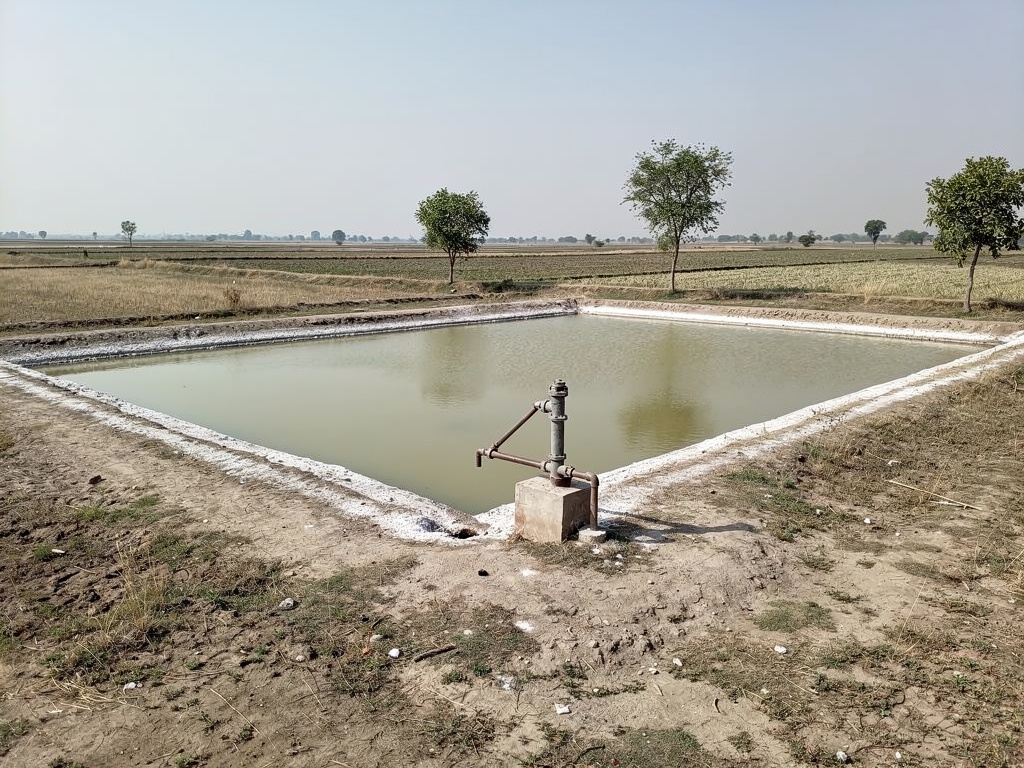
Why inland saline farming
States like Haryana, Punjab, Rajasthan and parts of UP have large areas of saline groundwater and salt-affected wasteland. Farming low-salinity vannamei there turns unproductive land into income, brings aquaculture to new regions, and reduces pressure on the coast.
Water and minerals — the critical part
Inland saline water is not the same as coastal brackish water. The salinity may be right, but the mineral profile is often wrong — potassium and magnesium can be deficient, which stresses shrimp and blocks growth.
Before stocking, test for potassium, magnesium and other minerals, not just salinity. Getting the mineral profile right is the difference between success and failure in inland saline farming.
| Parameter | Ideal range |
|---|---|
| Salinity | 5–15 ppt (low-salinity vannamei) |
| Potassium | Adequate for shrimp physiology — test and correct |
| Magnesium | Adequate — test and correct |
| pH | 7.5–8.5 |
| Alkalinity | 100–200 mg/L |
Species for inland saline
Low-salinity vannamei is the main species farmed inland, following CAA rules and certified seed. Scampi (freshwater prawn) is another inland option where water is fresh. See the vannamei and scampi guides.
Schemes and support
Inland saline aquaculture is promoted under PMMSY/NFDB and state programmes in Haryana and other states. Support can cover pond development and biofloc/RAS. Confirm current rates with your state fisheries department.
Starting inland
Test groundwater and soil
Full mineral panel, not just salinity.
Confirm legal status
Check CAA and state rules for inland vannamei farming.
Design the pond and water system
Plan for mineral correction and water storage.
Buy certified seed
From CAA-authorized hatcheries.
Follow BMPs
Water quality, feeding, biosecurity — and monitor minerals weekly.
Compare with coastal farming
See the coastal state guides and the species pages before you choose your system.
All state guides Scampi guide