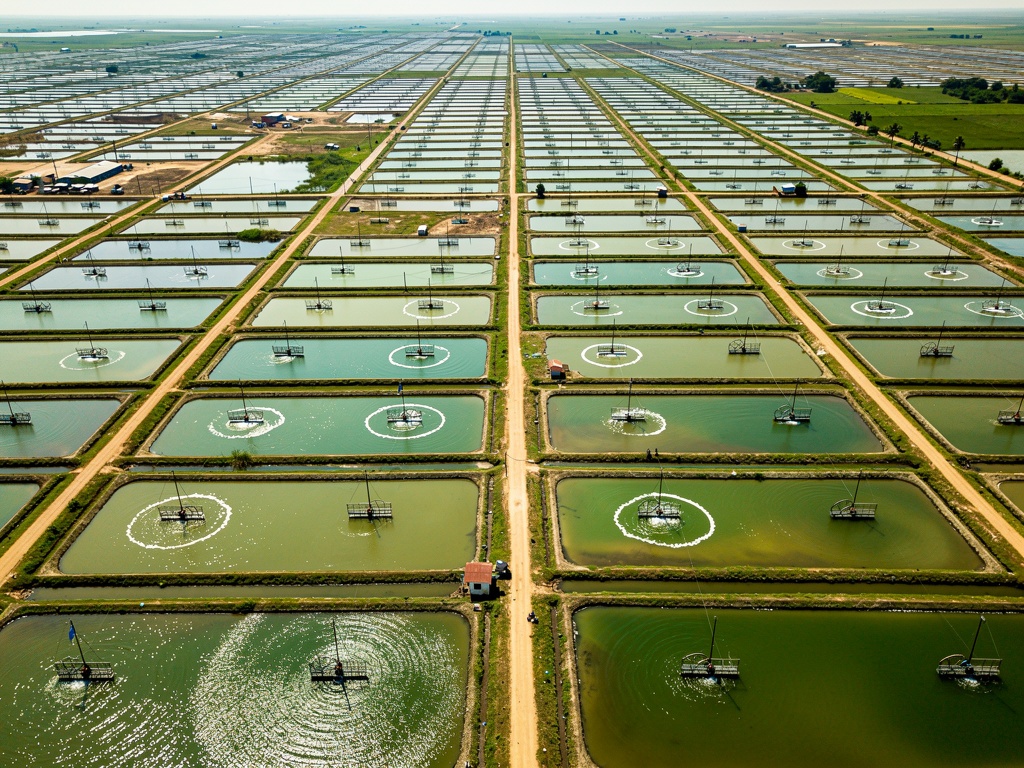
Why Andhra Pradesh leads
AP has the perfect combination: a long brackish-water coastline, river deltas with good water, a mature hatchery and feed industry, processors and export links, and experienced farmers. That ecosystem is why most of India's shrimp comes from here.
District hubs
| District | What's known for |
|---|---|
| West Godavari | The largest shrimp-producing district in India |
| Krishna | Major vannamei cluster, strong hatchery presence |
| Guntur | Large farm area, growing quickly |
| Prakasam | Coastal ponds, brackish water |
| Nellore | Southern hub with active farming and processing |
Water and seasons
AP farms use brackish water from the delta and coastal estuaries. The climate allows two to three crops a year. Summer heat raises pond temperatures and oxygen demand — aeration and water management matter most then.
- Salinity typically 10–25 ppt in the delta belt.
- Monsoon brings flood and disease risk — plan crop timing.
- WSSV and EHP pressure is real; biosecurity is essential.
Schemes and support
AP runs state aquaculture programmes alongside PMMSY/NFDB. Support areas include pond development, aerators, biofloc and hatcheries. Rates and application paths change — confirm with the AP Department of Fisheries.
Check current AP subsidy rates and deadlines with the state fisheries department or the district office. See government schemes for the general process.
Starting in AP
Choose a delta or coastal site
Test water salinity and soil first.
Register with CAA
Coastal registration plus vannamei permission.
Buy certified seed
From CAA-authorized hatcheries in the region.
Follow BMPs
Pond prep, feeding, water quality and biosecurity.
Sell through processors or local markets
AP has strong export and domestic channels.
New to the process? Start with the getting started guide.
Compare with other states
See how West Bengal, Odisha, Tamil Nadu, Gujarat and inland areas compare.
All state guides Economics